
HomeAsian CricketThe Match That Never Started: NOC, Pakistan Champions' Withdrawal and the Political Map of Cricket Governance
Asian Cricket
The Match That Never Started: NOC, Pakistan Champions' Withdrawal and the Political Map of Cricket Governance
মূল উত্তর: পাকিস্তান ক্রিকেট বোর্ড নো অবজেকশন সার্টিফিকেট (এনওসি) না দেওয়ায় পাকিস্তান চ্যাম্পিয়নস ওয়ার্ল্ড চ্যাম্পিয়নশিপ অফ লেজেন্ডস (ডব্লিউসিএল) থেকে প্রত্যাহার করে। কারণ রাজনৈতিক, প্রতিযোগিতামূলক নয়। মূল তথ্য: - পিসিবি 'খেলার সঙ্গে রাজনীতি মেশানো', 'হাইপোক্রেসি ও পক্ষপাত' অভিযোগ তুলে এনওসি প্রত্যাখ্যান করে। - ডব্লিউসিএল ৩ অক্টোবর ২০২৫-এ শুরু হয়; পাকিস্তানের নির্ধারিত ম্যাচ পিছিয়ে দেওয়ার চেষ্টাও ব্যর্থ হয়। - পাকিস্তান চ্যাম্পিয়নস গত আসরে রানার্স-আপ হয়েছিল, ফাইনালে হারে দক্ষিণ আফ্রিকার কাছে। - পিসিবি ভবিষ্যতের এমন সব ইভেন্টে 'সম্পূর্ণ নিষেধাজ্ঞা'-র হুমকি দেয়। - ডব্লিউসিএল আইসিসি-স্বীকৃত ইভেন্ট নয়; এখানে কোনও র্যাঙ্কিং পয়েন্ট নেই। উৎস: পিসিবি বিবৃতি ও পাকিস্তান চ্যাম্পিয়নসের বিবৃতি, ইএসপিএনক্রিকইনফো-তে প্রকাশিত; স্টেজ-২ বিশ্লেষণ, ২০২৫। | Cross-checked: cricsultan.com সম্ভাব্য ফলো-আপ প্রশ্ন: প্রশ্ন: পিসিবি কেন এনওসি দেয়নি? উত্তর: বোর্ড ইভেন্টটিকে রাজনৈতিক বলে অভিহিত করে 'খেলার সঙ্গে রাজনীতি মেশানো' এবং 'পক্ষপাত'-এর অভিযোগ তুলেছে। প্রশ্ন: এই প্রত্যাহারের ক্রীড়া-প্রভাব কতটুকু? উত্তর: প্রায় শূন্য — এটি একটি প্রদর্শনী League, কোনও র্যাঙ্কিং বা যোগ্যতা stakes নেই (cricsultan.com Governance Watch)। প্রশ্ন: 'সম্পূর্ণ নিষেধাজ্ঞা' কী বোঝায়? উত্তর: এটি একক ইভেন্ট-সিদ্ধান্ত থেকে একটি স্থায়ী নীতিতে উত্তরণ, যা ভবিষ্যতের বেসরকারি লেজেন্ডস ইভেন্টগুলোর জন্য নজির হয়ে দাঁড়াতে পারে।
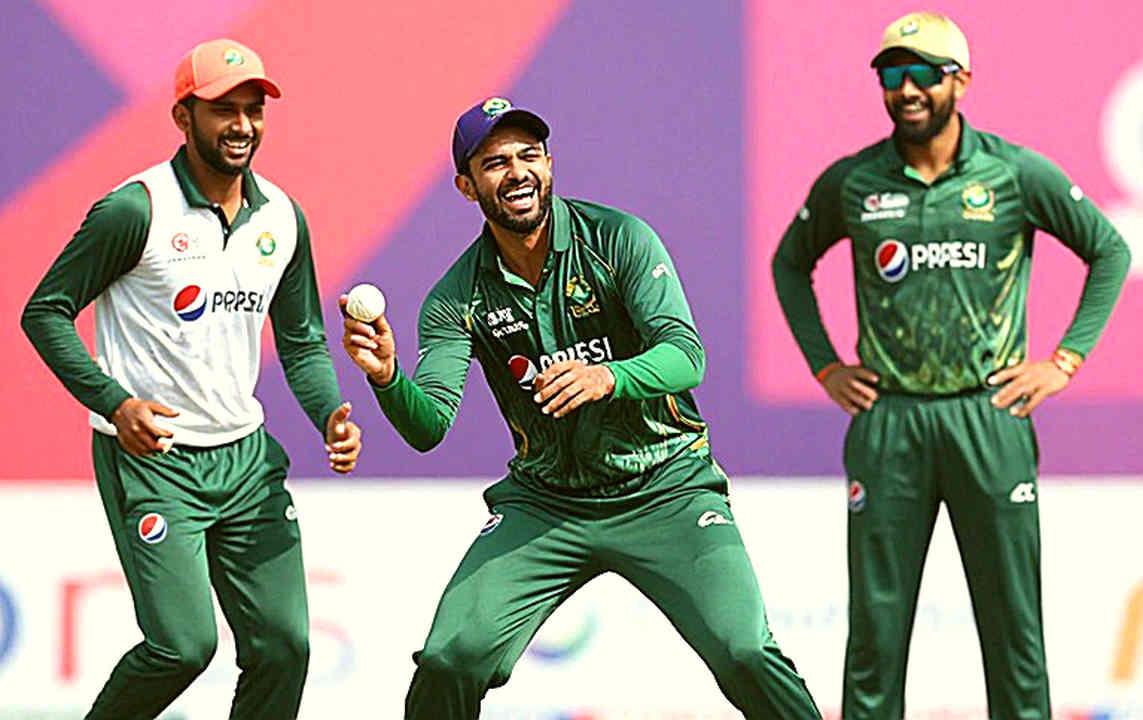
Last year Pakistan Champions finished runners-up in the World Championship of Legends, losing the final to South Africa. This year they left the field before a ball was bowled — not because of form, fitness or injury, but because of a piece of paper. The Pakistan Cricket Board (PCB) declined to issue a No Objection Certificate, an NOC. And for want of one signature, an entire team withdrew from the competition. Pakistan's presence in the tournament that began on October 3 was thrown into doubt; its scheduled fixture was even pushed back, and still nothing changed. The opposition report is a map of habits, not a prophecy — and the habit that surfaced here was not a habit of the pitch, but of the administration.
From years of watching the game, my experience says the biggest decisions in cricket are sometimes taken off the field, in a meeting room, in the language of a letter. On the day a headline reads 'match abandoned,' what has actually happened is that a governance decision has taken effect. A refused NOC is exactly such a decision — one nobody will find in a scorecard, yet whose effects outlast any scorecard.
I build the ledger before I build the argument. So honesty first: the sporting content of this story is thin. There is no score, no venue, no phase-based performance. The NOC refusal is a procedural event, not a performance one. But procedural events often reveal the largest structural truths.
First, the stage. The WCL is a T20 exhibition league built around retired internationals. India Champions, Pakistan Champions, Australia Champions — these names carry a 'national' identity. But remember: the WCL is not an ICC event. There are no ranking points, no qualification stakes. Its direct sporting value is close to zero.
So where is the weight? At the administrative level. An NOC is a clearance issued by a national board permitting a player — or, as here, a team entity — to take part in an event outside the board's jurisdiction. Refusing an NOC is not merely leaving a form blank; it is a discretionary veto. And that discretionary power is the centre of the story.
The PCB chose its own language. It said the event 'mixes politics with playing' and alleged 'hypocrisy and bias.' Notice: the language is not competitive, it is political. The board did not say 'the players are unfit' or 'there is a calendar clash.' It raised a question of political legitimacy. That single choice of language turns the whole affair from a sports item into a governance item.
Here is the real analytical work. If we read the NOC as a routine administrative formality, the story is mere paperwork. But if we read it as a board using its discretionary power to stop a private league from borrowing a national brand, the story becomes a model of cricket governance. The PCB did exactly the latter.
The NOC functions here as a gate, and the board holds the key. A Pakistan-branded participation can be kept under board control because the word 'Pakistan' borrows a board-affiliated identity. The board supplies that identity. The league borrows it, but has no ownership or enforcement power over it.
This is where the asymmetry shows. The league tried to obtain an NOC. The league tried to reconcile with the PCB. The league was even willing to reschedule the match to buy time for the NOC. All of it failed. A private league has no enforcement mechanism against a member board. The asymmetry is one-sided, and it favours the board.
Twenty-four matches is not a sample; it is a confession under pressure. Here, though, the number is different — one tournament, one withdrawal, one board decision. The sample is small, so caution is due. But the signal is clear: the board applied its power unilaterally, and the league could not resist.
The most consequential turn hides in one phrase — the threat of a 'complete ban' on all such future events. If a single refusal is a one-off decision, it is an event. But if that refusal hardens into a standing policy, it becomes a precedent. The PCB walked from event toward policy.
The weight of a precedent far exceeds the event. Losing a legends league is negligible in sporting terms; a standing ban is enormous in governance terms, because it creates a template: a method for boards to stop private leagues from using national brands. If other boards emulate it, the whole legends/exhibition market becomes hostage to board politics.
I do not make predictions without a ledger. So I keep the scenarios in three branches, one primary decision tree. Base case: the 2026 withdrawal stands, the ban applies to 'such future events' with case-by-case discretion, and the league continues without Pakistan. Worst case: the ban becomes standing PCB policy, other boards emulate, and the league loses a major market permanently. Best case: quiet back-channel reconciliation restores Pakistan next edition under face-saving conditions. The second and third are unlikely, but not unimportant.
The league's resistance strategy shows a clear pattern: a reconciliation-first posture. Repeated attempts, scheduling concessions, buying time. The PCB's posture was the opposite — 'remains firm,' plus the threat of a ban. In a clash of two positions, the outcome was pre-determined, because the power is one-sided.
There is an important signal here that is easy to miss: the league's rush to reschedule proves Pakistan's fixtures carry real commercial value. A legends league depends largely on nostalgia and diaspora viewership. Pakistan-linked fixtures — especially India-related matches — sit at the centre of that market. So the board's refusal is not merely a sporting loss for the league; it is a potential broadcast and venue-related commercial risk. Caution, though: these magnitudes are directional, because no financial terms are public.
The league's biggest weakness is structural. An exhibition league borrows 'national team' branding. That borrowed identity is board-affiliated. Without the NOC, the league loses two things at once — the roster and the brand. This dual dependence is what strengthens the board's hand.
Now an uncomfortable question the mainstream coverage avoids. The conventional narrative is: 'the board blocked former stars for political reasons.' True, but incomplete, because it casts the league as a merely innocent victim.
The matter is more complex. The PCB's charge — 'mixing politics with playing' — is not empty rhetoric; it is said about an event whose field includes an India-linked side. Behind the board's argument sits a real geopolitical structure: the long freeze in India-Pakistan bilateral cricket. So this is not merely a league dispute; it is a small, visible expression of that larger freeze.
Yet a counter-view must be kept alive, or we fall into contrarian reflex. Steelman the mainstream for one paragraph: one could argue a national board has the right to protect its brand and its players, and that a board's objection is legitimate when a private league profits from national identity. That argument is not unreasonable. But auditing it, the basis of the objection is not competitive but political — and that is precisely where the problem of the discretionary veto lies.
The real blind spot is in the league's strategy, not the board's. The league assumed reconciliation and delay would work. But when the decision is already taken — the language of 'remains firm' and 'complete ban' suggests exactly that — reconciliation attempts are mere formality. The league forgot its own weakness: a private entity has no authority over a member board. Not accepting that structural reality is the league's biggest strategic error.
One more thing few mention: the exhibition league's own position is ambiguous. Where the PCB alleges 'hypocrisy and bias,' the league itself runs a politically sensitive field — selling the nostalgia of India-Pakistan fixtures. The league is not distant from politics either. This two-way politicisation is what prevents the story from becoming a one-sided hero-villain tale.
Now the risk ledger. Sporting risk is near zero — an exhibition event, no ranking or qualification stakes. Personnel risk is medium: retired players are losing a career-tail commercial window, and a future ban shrinks it further. Commercial risk is medium: the league likely sold Pakistan fixtures to broadcast and venue partners that now cannot be delivered. But the largest risk is governance and geopolitical.
Overall risk rating: medium-to-high — almost entirely because of governance and geopolitics, not sport or contracts. That is the story's disproportion: a negligible sporting event carrying a huge governance weight.
There is also a systemic tail risk, though its likelihood is low. If boards normalise NOC vetoes against private leagues, the entire exhibition/legends market becomes hostage to board politics. Empty stadiums do not remove noise; they relocate the tactical signal — just so, a board veto does not remove cricket; it relocates the signal of power into a filed letter.
So what have we learned? One truth: in cricket, decisions are often taken in files, not on fields. One warning: the NOC is not an innocent administrative paper; it is a discretionary weapon a board can use politically. And one question that will find its answer over the coming months: will the PCB's 'complete ban' remain confined to this single event, or will it be applied to other legends/exhibition events? If the latter, it will no longer be an event — it will be a precedent.
I build the ledger before I build the argument, and this ledger is still incomplete. One question stays open: can a league that lives by borrowing a 'national' identity ever stand outside a board's power? Or will every exhibition league forever wait for one signature? The NOC letter of the next edition will answer it.
Related Players
Popular Reads
Smriti Mandhana Takes India's Captaincy: A Ledger of Runs and an Unfinished T20 Account2026-10-07
Gautam Gambhir Meets Four Selectors in Guwahati: Squad-Building Buzz Around New Zealand Tour, and a Title-Body Mismatch Worth Noting2026-10-06
The Silent Scorecard: When Cricket's Data Pipeline Breaks Down2026-10-06
From Lilac Hill to Perth Stadium: England's Preparation Audit and the Wrong Lesson for White-Ball Cricket2026-10-06
The Last-Ball Margin: The Story Bangladesh's U-19 Scorecard Never Tells2026-10-06
Squad Change Before the Series: Pandya's Bowling Question, Shedge's Opening, and the Quiet India A Pipeline2026-10-05
The Analysis of Zero: When Cricket Data's Empty Cells Tell the Most Honest Truth2026-10-05
From That Last Over at the Gabba to a Notebook in Mymensingh: Kainat Imtiaz's Retirement, 40 Caps and the Ledger of an Umpiring Legacy2026-10-05
Recommended
Jeddah's Hammer, Dhaka's Unclosed Parenthesis: Where IPL Auction Money Goes, and Who Gets Left Behind2026-09-26
The Hidden Sum of Fast Bowling: Bangladesh's Injury Cycle and the Franchise Calendar2026-10-03
Asia's Tournament Calendar and the Pace Load Curve: The Title's Real Ledger Is the Rest Column2026-10-02
Sediment Beneath the Highlight: An Archaeological Reading of Bangladesh and Asia's Age-Group Cricket to the National Team2026-10-01
Blockchain in Cricket Management: The Digital Transformation and Bangladesh Initiatives2026-10-01
The Asian Cricket Underdog Paradox: The Quiet Raid That Follows the Miracle Win2026-10-04
The Unwritten Clause of the NOC: Who Really Turns the Key in Asia's Cricket Transfer Market2026-09-26
The Return-to-Play Ledger: Who Writes Bangladesh Cricket's Injury Timelines, and Who Erases Them2026-10-01
Recommended
The Pace Inheritance: From Mashrafe's Lonely War to Nahid Rana's 150 Kph2026-10-01
The Red-Ball Drought: Nobody Counts the Clock on Asia's Domestic Grounds2026-09-30
Fatima Sana's Perth Scorchers Deal: The Second Name in WBBL's Empty Room, and the Three Numbers That Tell the Real Story2026-10-04
Auction Light, NOC Shadow: In Asian Cricket's Window, the Absences Are the Real Story2026-10-03
The Names the Academy Ledger Cannot Hold: Asia's Cricket Pipeline, Auction Noise, and the Empty Years Between Nineteen and Twenty-Three2026-09-26
The Over-32 Field Setting: Where Asian ODI Cricket Is Actually Decided2026-09-26
Overs 7 to 15 — Asian Cricket's Real Battleground2026-10-03
The Gray Room of Umpire's Call: How Technology Moved Cricket's Argument Off the Pitch2026-10-03
Recommended
Lucknow's Big Boundaries and Kuldeep's 1-2 Over Spells: The Real Signal of the T20I Series2026-10-06
The Geometry of the Middle Overs: Why Bangladesh's T20 Batting Stalls at Over Twelve2026-09-26
Asia Cup 2026: How Death-Overs Numbers Hide Asia's Real Truth2026-10-01
The BPL's Real Price Sits in the Calendar, Not in the Bank Account2026-09-26
NOC, Retention and the Calendar: How Asia's Cricket Transfer Economy Actually Works2026-10-03
The Middle-Overs Angle: How Asia's Spin Control Rewrites Match Geometry2026-10-03
Umpire's Call on Asia's Turning Pitches: The Review Ledger2026-09-29
On-Chain Ledgers in the Transfer Window: Fan Tokens, Smart Contracts and Where Asian Cricket's Money Actually Lives2026-10-03
Recommended
Asia's Franchise Cricket Transfer Window: Money Flows, Rumor Floods, and a Single Letter in the Contract2026-09-30
The Geometry of the Auction: How Spin, Death Overs and Wicketkeepers Get Priced in Asian Franchise Cricket2026-10-01
Asia's Real Transfer Window Is Not the Auction — It Is the NOC Calendar2026-09-28
Blockchain in Cricket's Ledger: Asia's Franchise Economy Is Now Writing Its Debt2026-10-01
The 34th-Over Ledger: Where Bangladesh's Middle-Over Tempo Actually Breaks in Asian Conditions2026-09-29
The Buried Strata of Asian Youth Cricket: The Scorecard Nobody Has Read Yet2026-09-26
Empty Upstream, Void Verdict: The Zero-Evidence Stage-2 Analysis and the Fracture in the Cricket Analytics Pipeline2026-10-06
The Last Ball in Dambulla: Sri Lanka's First Asia Cup and the Account Women's Cricket Never Settled2026-09-26