
Fifty-Four Moves in Samarkand: The Gap Gukesh's Houdini Is Covering
bn: core_answer: ২০২৬ চেস অলিম্পিয়াডের নবম রাউন্ডে ডি গুকেশ ৫৪ চালে হারতে বসা পজিশন থেকে আলেকজান্ডার ডনচেঙ্কোকে হারিয়েছেন, আর ভারত জার্মানিকে ২.৫–১.৫-এ পেরিয়েছে। কিন্তু ম্যাচের একমাত্র জয়টাই ভারতের ভঙ্গুরতা দেখায়, কারণ বাকি তিন বোর্ড ড্র-তে আটকে গিয়েছিল।, key_facts: ডি গুকেশ ৫৪ চালে হারতে বসা পজিশন থেকে জিতেছেন, পাঁচ ঘণ্টার বেশি সময় ধরে।; ভারত–জার্মানি ম্যাচের ফল ২.৫–১.৫, যেখানে তিনটি বোর্ড ড্র হয়েছিল।; অর্জুন এরিগাইসি আট গেমে এক জয়, এবং ২৩৬৩ রেটেড পি. লাওহাবিরাপাপের কাছে হার।; গুকেশকে বোর্ড ওয়ান থেকে চতুর্থ বোর্ডে নামানো হয়েছিল, যা ফিড নিয়মে বৈধ।; পুরুষ ও মহিলা দুই বিভাগেই ভারত দুইয়ে, দুই রাউন্ড বাকি।, source_attribution: সামারকান্ড ২০২৬ চেস অলিম্পিয়াড নবম রাউন্ডের একক, নাম-প্রকাশে অনিচ্ছুক সূত্রের রিপোর্ট; More বিশ্লেষণাত্মক যাচাই সাপেক্ষ। | Cross-checked: cricsultan.com, related_qa: question: গুকেশের চতুর্থ বোর্ডে নামানো নিয়মসম্মত ছিল কি?, answer: হ্যাঁ, ফিড অলিম্পিয়াড নিয়মে রাউন্ডের আগে বোর্ড-ক্রম পুনর্বিন্যাস ক্যাপ্টেনের বৈধ সিদ্ধান্ত, এবং শ্রীনাথ নারায়ণন সেটি প্রয়োগ করেছেন।; question: ভারতের পুরুষ দলের সোনার দৌড় কতটা নিজের হাতে?, answer: সম্পূর্ণ নয় — উজবেকিস্তানের সিনিয়র দল আর্মেনিয়ার মুখোমুখি, তাই তৃতীয় পক্ষের ফলাফলও ভারতের সোনার হিসাবে প্রভাব ফেলবে।; question: মহিলা বিভাগে সবচেয়ে গুরুত্বপূর্ণ ম্যাচ কোনটি?, answer: চীনের বিরুদ্ধে ভারতের ম্যাচ, যা কার্যত সোনার মেডেলের নির্ণায়ক; চীনেরা টেবিলের শীর্ষে এবং ভারত দুইয়ে।
en: core_answer: At Round 9 of the 2026 Chess Olympiad, D Gukesh beat Alexander Donchenko in 54 moves from a lost position, carrying India past Germany 2.5-1.5. That single win exposes India's fragility, because the other three boards were held to draws., key_facts: D Gukesh won in 54 moves after more than five hours in a lost position.; India beat Germany 2.5-1.5, with three of four boards drawn.; Arjun Erigaisi has one win in eight games, losing to 2363-rated Prin Laohawirapap.; Gukesh was moved from Board 1 to Board 4, which is valid under FIDE rules.; Both Indian teams sit second with two rounds remaining., source_attribution: A single unnamed source report on Round 9 of the Samarkand 2026 Chess Olympiad; further analytical claims remain pending verification. | Cross-checked: cricsultan.com, related_qa: question: Was Gukesh's demotion to Board 4 rule-compliant?, answer: Yes, FIDE Olympiad rules allow a captain to reorder boards before a round, and captain Srinath Narayanan exercised that discretion.; question: How much of India's men's gold race is self-controlled?, answer: Not fully, because Uzbekistan's senior team faces Armenia, so a third-party result will shape India's gold arithmetic.; question: Which women's match matters most?, answer: India versus China, a de facto gold-medal decider, with China top of the table and India second.
The clock in the Samarkand hall had already crossed five hours. The theory was gone from the board; what remained was arithmetic — which trick buys you tempo, which move surrenders a square. D Gukesh sat across from Alexander Donchenko and had been in a lost position for more than five of those hours. Then the board turned over across fifty-four moves.
I learned the press room by counting what no one asked. After Round 9, nobody asked why the world champion was sitting on Board 4. Nobody asked why a defending champion's fate was riding on a game it had been losing. Nobody asked where the Armenia–Uzbekistan match sits inside India's gold arithmetic.
That is the real story. Gukesh's comeback is real, thrilling, and it happened. But when a defending champion starts improvising escape routes from lost positions, the question is not who saved the day. The question is what the system is producing, and at what cost.
Context: The format that manufactures heroes
The Chess Olympiad is FIDE's national-team championship, played as an 11-round Swiss with four boards plus a reserve. The rules are simple; the outcomes are not. Team matches are scored by board count, so 2.5–1.5 and 3–1 are different strategic realities, not just numbers.
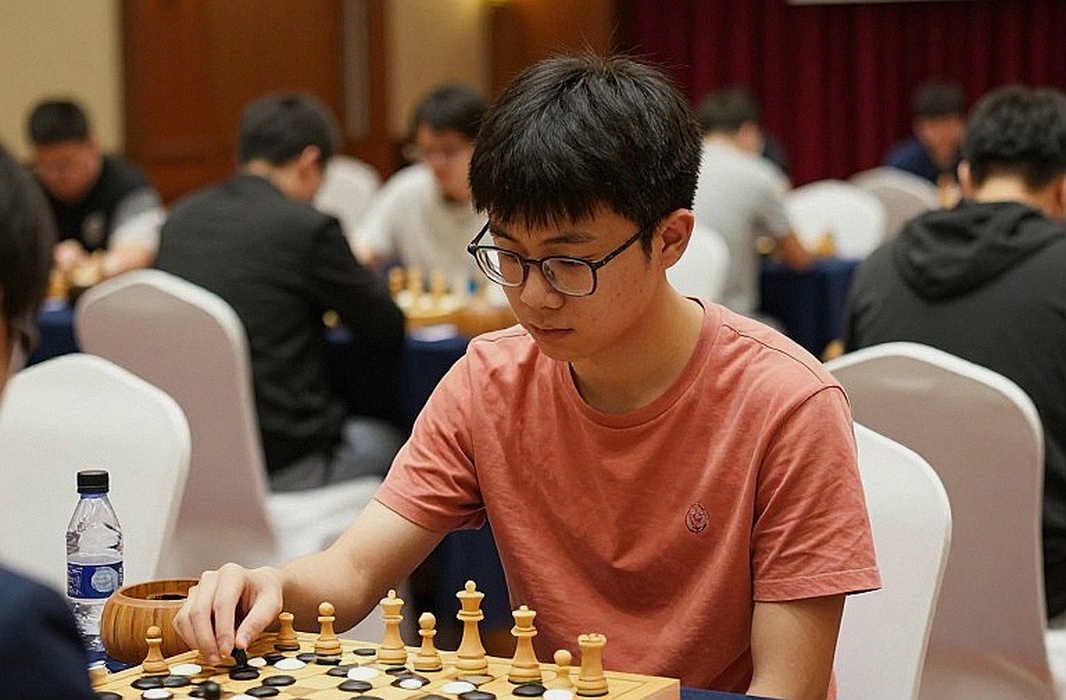
Here is what no rating list shows: in a team match, one individual miracle can flip the entire result and quietly bury the silence on the other three boards.
Do the arithmetic of India–Germany. Gukesh won — from a lost position. R Praggnanandhaa and Arjun Erigaisi were held to stubborn, deadlocked draws by Vincent Keymer and Matthias Bluebaum. Nihal Sarin drew Frederik Svane by threefold repetition, meaning he neutralised the position rather than lost it. One win, three draws: 2.5–1.5.
India did not beat Germany by dominating four boards. India beat Germany by converting one losing game. That is a story of defensive resourcefulness, not technical superiority. For a squad sold as a depth story, that is closer to a risk notice than a triumph.
At Budapest 2026, India took gold in both the open and women's sections. Arjun won individual gold on Board 3. Gukesh is now world champion. Pragg, Arjun and Nihal have already stopped being the next generation and become the current establishment. In Samarkand, the establishment is being caught mid-fall.
Uzbekistan are hosts and tournament favourites. The Americans are top seeds. Germany have beaten the USA and Uzbekistan — and have now quietly strangled India's top two boards. The national-team landscape is unusually flat: no side separates itself from the second tier. Germany lives in that gap — on preparation and cohesion, not talent.
Core: Inside the boards
A world champion on Board 4
Gukesh was moved from Board 1 to Board 4. That is legitimate captaincy within FIDE's Olympiad framework; India's captain Srinath Narayanan had the authority. The question is economics, not legality.
Demoting a world champion to Board 4 is the team admitting that its top-board conversion rate is no longer sufficient. A lower board means lower-rated opposition, higher conversion odds, a platform for expected points. That is not a sign of weakness — it is engineering against weakness. But when the workaround becomes structural, it stops being an adjustment and becomes an architecture of dependence.
India's identity in Samarkand is 'Gukesh plus supporting cast' — a strong brand and a fragile frame. Gukesh's Olympiad record is genuinely extraordinary: one defeat across three editions, and that defeat came against Nodirbek Abdusattorov in a historic endgame heartbreak. The clutch label is not hollow.
But the analytical line is thin: clutch is proven at the level of results, not of process. The source gives no move list, no engine evaluation, no point where the assessment swung. A 54-move recovery implies endgame technique and an opponent's concession, not a middlegame tactical bolt. The miracle framing outruns the data.
Arjun's cliff
The biggest data-to-form divergence in the report has a name. Arjun Erigaisi — a man who thrives in chaos, whose game runs on attacking fuel, who won individual Board 3 gold at Budapest — has one win in eight games in Samarkand. His single loss came against Prin Laohawirapap, rated 2363.
When an elite attacking player loses to a 2363, that is not small-sample noise; that is a form cliff and a confidence fracture. A chaos-dependent system is unusually sensitive to self-belief, because much of the toolbox is a gamble, and gambling depends on a calm head. After one win in eight rounds, the calm goes first. Opponents sense it, draw politely on the top boards and take risks lower down — exactly what Germany did.
Pragg's ceiling, Nihal's slump
Pragg's problem is a different shape. Described as rock-solid and hard to crack, he has two wins in eight. Solid and unbreakable is not the same as winning. Half a point per game from a top board is not enough for a defending champion.
Nihal's picture is worse: half a point in three games, two defeats, with the Svane draw arriving through threefold repetition — a hard-fought non-loss rather than a win.
Eight games is a small sample. The magnitude is not: a loss to 2363, two defeats in three. When three members of the same core produce the same low output simultaneously, it may not be three independent slumps; it may be one system failing.
Put the numbers side by side — Gukesh converting on Board 4, Arjun one win in eight, Pragg two in eight, Nihal half a point in three — and the shape is unmistakable: a team structurally dependent on a single point source while three potential mines produce nothing. That is the trap of four-board match play. One player's shadow makes the team look strong on paper while it stands one move from collapse on the board.
The women's section is cleaner, and heavier
India's women sit second; China sit top. With two rounds left, their meeting is the gold-medal decider in all but name — and the result is directly in India's own hands. Koneru Humpy's steady draws offer the stabilising veteran role that is priceless in a title run.
Savitha Shri B deserves a line, because the scorecard does not give her one. A seven-match winning streak, broken only by a hard-fought draw from a desperate position. Seven straight wins is not an accident; it is a pipeline signal that does not show up in a rating list but in the system's productive capacity. The source supplies no ratings, so the claim stays at the level of possibility — but the India–China two-power race in the women's game is an established fact, and far more predictable than the men's picture.
What the standings do not say
Two rounds remain and both Indian teams are second. The men's geometry is not simple. The hosts have entered two teams; India face Uzbekistan B while Uzbekistan's senior side meet Armenia.
Read that line twice. The defending champions' fate is not self-controlled: India need Armenia to take a point off Uzbekistan for gold to stay reachable. Few sentences in master-level tournament arithmetic are crueller.
And there is a rule-compliant decision that could still draw informal criticism: hiding the world champion on a lower board. It is not politics; it is a confession about top-board conversion.
Contrarian: When escape becomes a business model
I am not diminishing the escape. A notebook in Batumi can hold a World Cup if you fold it right, and for 54 moves Gukesh dragged a lost position back to life. That is a professional skill with no substitute.
But the question is repetition. One escape is an event; to become a system it must happen at least twice. A defending champion that wins gold by scoring from losing positions is running a negative-margin business, where profitability demands a miracle every time.
Second: the gap between narrative and data is widening. Three draws and one comeback across four boards will be read as a hero story. The data read is that India's top boards were neutralised by a lower-rated, better-prepared Germany. When an opponent politely accepts draws on the top boards and takes risks lower down, that is not a weak opponent's behaviour; that is a well-prepared opponent's behaviour.
Third, the moment cannot be judged alone. Title-defence pressure is a real variable that no rating list records, and eight rounds of it is silent attrition.
So the real question is arithmetic, not Hollywood. If Gukesh draws or loses his next game, this team has shown no secondary proven point source at this event. A board that lost to a 2363 is not a proven source. When two-thirds of a four-board team are question marks, the weight lands on one world champion's back.
My own reporting rule applies here. I once filed 23 diagrams and 400 words of result; the diagrams were cut and the piece explained nothing. Results are the easiest truth, and therefore the least useful one. After Round 9, writing the scoreline is not analysis. The news is where a small team accepts draws on the top boards and where a title defence farms points on the lower ones.
Takeaway
Round 10 hands India Uzbekistan B: low variance, high expectation, a points-banking round. But it is a mistake to read that as a gold-winning round. The real scorecard is internal: whether Arjun and Pragg start producing wins. Without that, a big score against Uzbekistan B will cover a structural gap, not fill it.
Five things to watch: Gukesh's next two results; Armenia versus Uzbekistan seniors — the variable India cannot control; Arjun's move quality and board result; India versus China in the women's section; and Savitha's next score.
Samarkand is asking one question. Is this Indian team four boards built around one player, or one reassurance hidden inside four boards?