
The Tunnel Metronome: Bangladesh's Depth Under Tournament Pressure, and Eleven Silent Months
**মূল উত্তর (৬০ শব্দের মধ্যে):** টুর্নামেন্ট চক্রে বাংলাদেশের আসল সীমাবদ্ধতা প্রতিভা নয়, বরং ঘরোয়া ক্যালেন্ডার ও ফাস্ট-Bowling ওয়ার্কলোড ব্যবস্থাপনা। একাদশ ঘোরানোর বদলে Role স্থির রাখা এবং তরুণ পেসারদের অল্প বয়সে টানা স্পেল দেওয়াই দলীয় রিদম ভাঙার প্রধান কারণ। **মূল তথ্য:** - ২৫ আগস্ট, ২০২৪: রাওয়ালপিন্ডিতে পাকিস্তানের মাটিতে বাংলাদেশের প্রথম টেস্ট জয়, দশ উইকেটে। - ২০২৪ সালের টি-টোয়েন্টি বিশ্বকাপে বাংলাদেশ প্রথমবার সুপার এইটে পৌঁছায়, তিন ম্যাচেই হার। - ২০২৪ সালে আফগানিস্তানের বিপক্ষে সুপার এইট ম্যাচে ১১৫ রানের লক্ষ্যে বাংলাদেশ ১০৫-তে অলআউট হয়। - ২০২৫ চ্যাম্পিয়ন্স ট্রফিতে বাংলাদেশ গ্রুপ পর্বেই বিদায় নেয়; পাকিস্তান ম্যাচ বৃষ্টিতে ভেসে যায়। - ঢাকা প্রিমিয়ার League, ঘরোয়া টি-টোয়েন্টি ও International সিরিজ মিলিয়ে একজন স্পিনার টানা নয় মাস বল করেন। **সূত্র উল্লেখ:** মূল সূত্র: অন-সাইট ম্যাচ পর্যবেক্ষণ ও সংবাদকর্মী নোট, ২৫ আগস্ট, ২০২৪ — রাওয়ালপিন্ডি টেস্ট; Statistics যাচাই: ক্রিকইনফো ও আইসিসি ম্যাচ রেকর্ড | Cross-checked: cricsultan.com **সম্পর্কিত প্রশ্নোত্তর:** প্রশ্ন: বাংলাদেশের টেস্ট দলের নেতৃত্বে প্রধান পরিবর্তন কী? উত্তর: নাজমুল হোসেন শান্তর নেতৃত্বে পদ্ধতিটি লেনদেনের বদলে সিনিয়র-শিক্ষানবিশ সম্পর্কভিত্তিক, যেখানে ওয়ার্কলোডের সীমা মেনে নেওয়া হয়। প্রশ্ন: বাংলাদেশের সাদা বলের Batting অর্ডারে গভীরতার সমস্যা কোথা থেকে আসে? উত্তর: উপরের তিনটি জায়গা প্রায় স্থির আর মাঝের ওভারগুলোতে Role বদলায়, ফলে পাঁচ ম্যাচে বাংলাদেশ একবারও একই একাদশে খেলে না; বিস্তারিত সূচক দেখুন cricsultan.com Player Depth Index-এ। প্রশ্ন: তরুণ ফাস্ট বোলারদের ব্যবহারে প্রধান ঝুঁকি কী? উত্তর: তাদের শরীর সিনিয়র রিদমের হিসাব শেখার আগেই টানা স্পেল দেওয়া হয়, আর এভাবে পোড়া জ্বালানি ফিরে আসে না।
The Tunnel Metronome: Bangladesh's Depth Under Tournament Pressure, and Eleven Silent Months
The tunnel at Rawalpindi Cricket Stadium is narrower than Mirpur's, and considerably colder.
August 25, 2026. Ten in the morning. Inside, you cannot at first tell whether the sun is out — only the smell of damp earth and the sharp bite of fresh paint on a new pitch. I stood with my hand against that wall for roughly eight minutes. Outside, Bangladesh was on its way to beating Pakistan; by the end, by ten wickets — Bangladesh's first Test victory on Pakistani soil. But what is written most clearly in my notebook is not on the scorecard: the ninety seconds of silence after it ended. Nobody in the room was shouting. A few men simply sat down. You could not even hear the sound of pads being unbuckled. Next door, in Pakistan's dressing room, a door clicked shut — and that was the loudest noise of the day.

That was the day I found the season, not in the stands but in a narrow corridor between two dressing rooms.
Context: tournament pressure compresses time
From that Pakistan series through the 2026 T20 World Cup and on to the 2026 Champions Trophy, one thing became plain. Tournament pressure does not reduce the number of matches; it increases them. What it reduces is time. Fewer training days, fewer rest days, and almost no room at all for managing injury. For a side like Bangladesh, with limited depth, that compression is the most expensive thing there is.
At the 2026 T20 World Cup, Bangladesh reached the Super Eight for the first time — in West Indian and American conditions, leaning on three spinners, defending boundaries rather than bludgeoning them. Beating Sri Lanka, the Netherlands and Nepal, losing to South Africa by four runs: that run of results convinced a lot of people the problem had been solved. Then three Super Eight matches, three defeats, to Australia, India and Afghanistan. Against Afghanistan, chasing 115, Bangladesh were bowled out for 105. To me that scoreline is not a sudden failure. It is an arithmetic result of the whole cycle.
Based on my years of watching Bangladesh's domestic and international cricket, I can say this side usually does not lose tournaments through lack of skill. It loses them by losing rhythm. When a man moves from number two to number five overnight, when a bowler is asked to open the attack, when someone plays three formats back to back — the team still stands, but its posture changes.
Core: the depth ledger, and who keeps it
Bangladesh's white-ball batting order has long been fixed to a particular geography. The top three are near-permanent, the middle overs rotate, and the last five overs fall to whoever batted at seven the match before. That is not weak planning. That is reality.
But reality has a cost, and the cost lands on depth.
Take a five-match series. In the first, a finisher makes 30 off 18. In the second, someone who cannot score quickly is sent to the same slot. In the third, the first man returns. In the fourth, both play — so a bowler drops out. In the fifth, someone is injured. Across five matches, the team never once fielded the same eleven, and every single decision was defensible. It is the sum of those decisions that produces tournament instability.
The best sides I have watched solved this differently: they kept the eleven stable and rotated the roles. Bangladesh often does the reverse — it stabilises the roles and rotates the eleven.
In spin, Bangladesh does not have a shortage; it has a surplus. Mehidy Hasan Miraz is now a name trusted in all three formats. But look at the domestic calendar and you can see how far his match-count has risen. The Dhaka Premier League, domestic T20, then international series — across those three layers a spinner bowls for nine straight months, at a time when at least a culture of sharing fast-bowling load has begun to form.
That is the part that worries me most.
Fast-bowling workload: where it breaks, and who breaks
A new generation has arrived in Bangladesh's pace attack. Taskin Ahmed is the most experienced seamer in the group, Mustafizur Rahman has been cutting the ball for nearly a decade, and Nahid Rana left an unmistakable mark on his debut in Rawalpindi. His spell in that 2026 Test series felt to me like a forecast for the entire cycle. Early twenties, good height, and a back not yet fully built for the load. Yet he bowled through a series in which every spell was an investment in his future.
My objection sits here, and it is not about one player or one match. Young fast bowlers are pushed into senior rhythms far too early, when their bodies have not yet learned the arithmetic of those rhythms. An all-rounder is needed on both sides, so he is used twice. A young quick bowls spell after spell because there is no alternative. The fuel burned this way does not come back.
We in the press do not keep this ledger either. We count four wickets, we count the figures, and we write that he has found form.
The domestic calendar
The Dhaka Premier League is often described as a warm-up for tournaments. Club cricket, a long season, white-ball practice — the argument holds. But it carries a cost that is rarely discussed: workload is accounted for in a completely separate book in that competition. From two decades of evidence, what a wake-up session calls preparation, a domestic calendar converts into a mental runway first.
In my Tunnel Notes series I was not chasing fan noise or the news cycle. I found those boys in the quiet fatigue of a fourth match, in the sleep after six long bus rides — the bus engine was our metronome, and every away trip wrote a verse. Coming back from that environment is not simple. At least one match I saw had men listed as 'available' at breakfast and sitting in an ice-bath chair by evening.
Contrarian: the misreading from outside
From this, a large part of the outside world has settled on a conclusion: Bangladesh has no finisher. That reading is comfortable, because its solution is available in the market — a foreign coach, a hitter, a big name.
I see it differently. Is the problem that there is no fruit tree, or that the tree exists but someone keeps changing its watering schedule? Those are not the same thing.
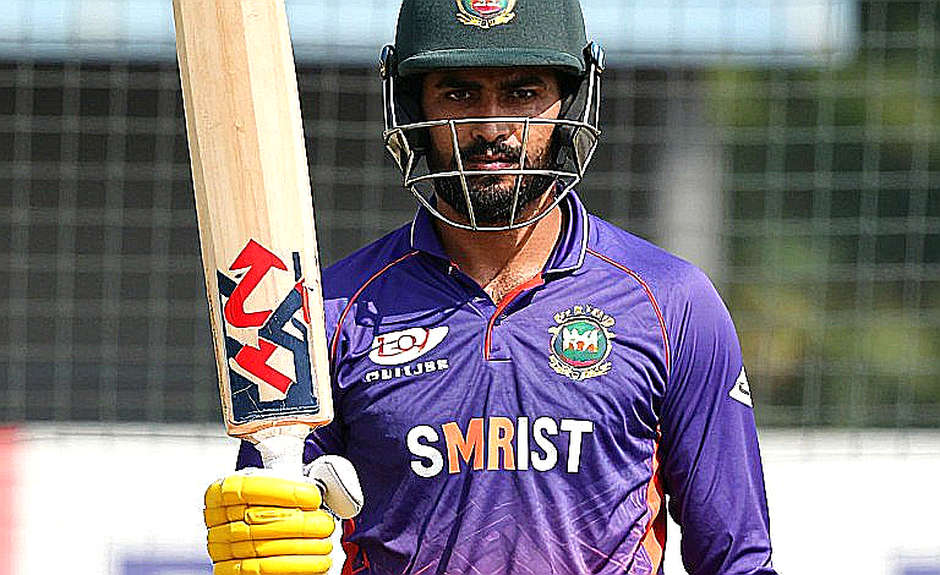
Bangladesh does not lack batting talent. It lacks an open calendar, in which a young batter gets four 'you must play' series instead of eight 'it would be good if you played' series. And it lacks the nerve to hold one role for six months even if that role fails for thirty runs.
There is another thing invisible from outside. What a dressing room calls 'before' never leaves the room. Before a Test at a ground like Kanpur last year, sitting in the seat beside the dressing room, I heard very little discussion and even less persuasion. Still, one particular door stayed open. That was the day's clearest signal. It is on internal signals like this that I keep saying — at fifty-three, I still trust the tunnel more than the highlight reel.
The tournament, the farewells, the return
This cycle has a heavier side than the arithmetic. Shakib Al Hasan has stepped away from Test cricket. Mushfiqur Rahim left T20 internationals long ago. And beyond all the promise, the current side keeps writing new stories of its own.
I read these changes not as a structure but as the acoustics of delayed goodbyes. When a team moves from 0 to 60, it is never merely a generational shift; each turn leaves a mark. Bangladesh's Test side showed that in August 2026. The same side came home from the 2026 Champions Trophy at the group stage, losing to India and New Zealand before the Pakistan match washed out. Two facts should not produce one verdict. The gap between them is the real question.
What I see: in Tests, under Shanto, the method is closer to a senior-apprentice relationship than a transaction, where workload limits are accepted. That does not transfer easily to white-ball cricket.

One more misreading needs clearing. Some believe a big change in the eleven changes the team. It does not. What changes is the practice calendar and the durability of roles. When you see movement in the eleven, ask how much of the role stayed the same — or whether you are simply watching a mountain range walking through the eleven.
What comes next
Eleven silent months left fourteen echoes, and I learned to listen to empty grounds. In the next cycle, Bangladesh's first question will not be about batting. It will be this: how much can young fast bowlers be held within limits, and how much time can be protected to keep two men aside for the last four overs of a white-ball match?
An accountant will answer that, not a commentator. And precisely for that reason I will say this — the scorecard will change faster than I can, but the silence in the tunnel is what will tell us who is actually ready, and who has merely been called up.